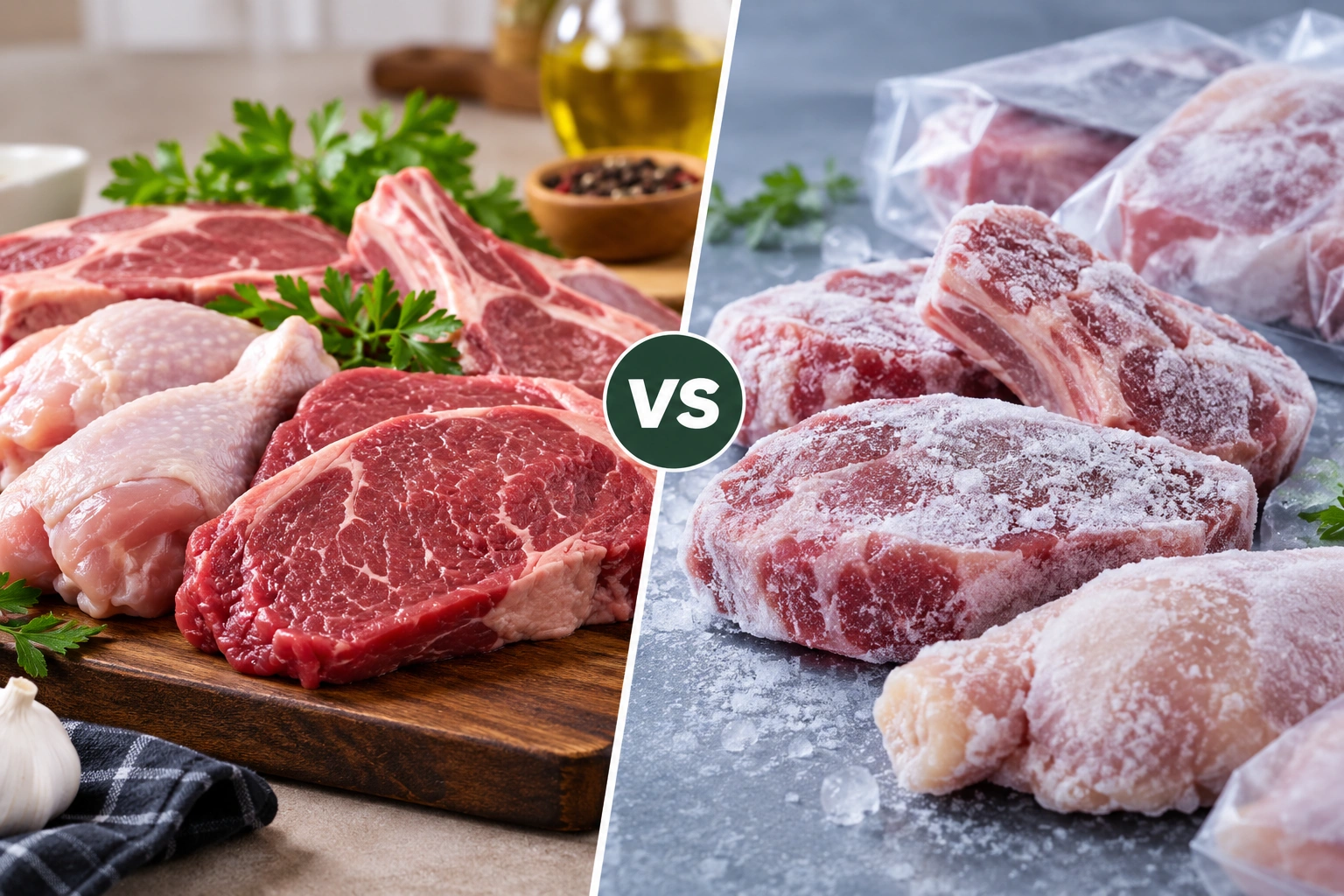
When buying meat, one of the first choices you may face is whether to buy it fresh or frozen. Fresh meat is often preferred for its texture and convenience when cooking immediately, while frozen meat is valued for its longer storage life and convenience.
But is fresh meat actually healthier? Does freezing reduce the nutritional value of meat? And does frozen meat always taste different?
The better choice depends on how you plan to use the meat.
The quality of meat depends on several factors, including how it was handled, how quickly it was chilled or frozen, its packaging, temperature control, storage conditions, and how it is thawed and cooked. If you are buying meat for home cooking, it is also important to know what to look for when buying fresh meat so you can make a more informed choice.
For everyday meals, both fresh and properly frozen meat can be good choices. The right option depends on the cut, recipe, storage needs and how soon you plan to cook it.
Fresh vs Frozen Meat: At a Glance
| Factor | Fresh Meat | Frozen Meat |
| Texture | Usually retains its natural texture well | Can change slightly after freezing and thawing |
| Juiciness | Generally retains more natural moisture | May lose some moisture during thawing |
| Shelf life | Shorter | Much longer when stored correctly |
| Convenience | Ready to cook | Requires safe thawing before cooking in many recipes |
| Meal planning | Best when cooking soon | Useful for stocking meat for later |
| Nutrition | Good source of protein and nutrients | Freezing generally preserves nutritional value |
| Best for | Immediate cooking and tender cuts | Long-term storage, meal planning and many slow-cooked dishes |
What Is the Difference Between Fresh and Frozen Meat?
The main difference is how the meat is preserved after processing.
Fresh meat is kept chilled rather than frozen and is intended to be cooked within a relatively short period. Its texture and moisture are maintained through appropriate refrigeration and handling.
Frozen meat is stored at freezing temperatures to significantly slow the processes that cause food quality to deteriorate. When meat is frozen, the water naturally present in the muscle turns into ice. Depending on how quickly it freezes, ice crystals can affect the structure of the muscle tissue.
This does not automatically make frozen meat poor quality.
The freezing process, packaging, storage temperature and thawing method all influence the final result.
Is Fresh Meat Better Than Frozen Meat?
For some meals, fresh meat can have an advantage, particularly when the texture of the meat is central to the dish.
Fresh meat can provide:
- A firm, natural texture
- Good moisture retention
- No need for thawing
- Immediate preparation
- A particularly good experience with tender cuts cooked simply
This can matter when preparing foods such as steaks, kebabs or grilled cuts where tenderness and juiciness are easy to notice.
However, that does not mean frozen meat is inferior in every situation.
Cuts used for curries, stews, minced dishes and slow cooking can often perform very well after proper freezing and thawing.
So the more useful question is not “Is fresh always better?”
It is:
“Which option is better for the way I plan to cook and use the meat?”
How Freezing Affects Meat Texture
One of the biggest differences between fresh and frozen meat is texture.
Meat contains a significant amount of water. During freezing, that water forms ice crystals. If freezing happens slowly, larger ice crystals can develop and may disrupt some of the muscle structure.
When the meat is thawed, some of that moisture can be released as liquid.
This can result in a small difference in:
- Tenderness
- Juiciness
- Texture
- Moisture retention
The effect is not necessarily dramatic, particularly when the meat has been frozen properly and thawed carefully.
What about tender cuts?
The difference can be more noticeable with tender cuts that are cooked quickly, where texture and juiciness play a bigger role. If you are choosing beef for a particular cooking method, our guide to beef cuts can help you understand which cuts are better suited to different dishes.
For example, a steak cooked on a hot grill depends heavily on its tenderness and juiciness. Careful handling from the time the meat is cut through to cooking can therefore make a meaningful difference.
On the other hand, meat destined for a curry, stew or slow-cooked dish may be less affected because the cooking method itself changes the texture of the meat.
Does Freezing Meat Destroy Protein?
No. Freezing does not destroy the protein in meat.
Freezing is primarily a preservation method. Properly frozen meat can retain its nutritional value, including protein, when it is stored and handled correctly.
The more noticeable difference between fresh and frozen meat is generally related to texture, moisture and convenience, rather than a major loss of protein.
The same principle applies to many cuts of beef, mutton and chicken.
If nutrition is your main concern, choosing a suitable cut and preparing it properly is more important than simply choosing fresh over frozen.
Fresh Meat vs Frozen Meat: Which Has Better Taste?
Taste is more complicated than freshness alone.
Fresh meat may have an advantage when you are preparing a dish where the natural texture and moisture of the meat are highly noticeable.
But properly frozen meat can still taste very good.
The outcome depends on:
- The quality of the original meat
- How quickly it was frozen
- How it was packaged
- How long it remained frozen
- Whether freezer burn occurred
- How it was thawed
- How it was cooked
For example, a well-handled frozen cut that has been properly packaged can produce a better meal than poor-quality meat that has been mishandled.
That is why cold-chain management and temperature control matter just as much as whether meat is labelled fresh or frozen.
Fresh Meat vs Frozen Meat: Which Is Healthier?
Neither fresh nor properly frozen meat is automatically healthier simply because of its storage state.
Freezing itself does not turn meat into an unhealthy food.
What matters more is:
- The type and cut of meat
- Fat content
- Portion size
- Cooking method
- Overall diet
- Storage and food-safety practices
Chicken, beef and mutton can all form part of a balanced diet when consumed appropriately and prepared safely.
If you are choosing meat for nutrition, look beyond the fresh/frozen label and consider the actual cut and how you intend to cook it.
Fresh Meat Has One Major Advantage: Convenience
Fresh meat does not need to be thawed.
You can order or purchase the quantity you need, refrigerate it appropriately and prepare it when required.
This is particularly convenient when:
- You are cooking the same day
- You are preparing tender cuts
- You have planned a barbecue
- You need meat for a family meal
- You want a particular cut prepared for a specific recipe
For shoppers who prefer to order meat shortly before cooking, fresh meat delivery can make meal planning easier.
Frozen Meat Has One Major Advantage: Longer Storage
The biggest benefit of frozen meat is its extended storage life.
Instead of needing to use the meat soon after purchase, freezing allows you to keep it for much longer when stored under appropriate conditions.
This can be useful if you:
- Buy meat in larger quantities
- Plan meals in advance
- Cook only once or twice a week
- Want to keep different cuts available
- Want to reduce unnecessary food waste
However, longer storage does not mean meat can be forgotten in the freezer indefinitely. Packaging, freezer temperature and storage duration all affect quality.
How Temperature Control Affects Meat Quality
Whether meat is fresh or frozen, temperature control is critical.
Fresh meat needs to remain properly chilled from processing through storage and delivery. Frozen meat needs to remain consistently frozen to protect its quality.
Repeated temperature changes can negatively affect meat quality. For fresh meat, poor temperature management can accelerate spoilage. For frozen meat, temperature fluctuations can contribute to ice formation and quality loss.
This is particularly important when ordering meat online.
A reliable supplier should have appropriate systems for:
- Chilled storage
- Frozen storage where applicable
- Hygienic handling
- Suitable packaging
- Temperature-controlled transportation
- Timely delivery
Tradus Butchery places temperature control and quality monitoring among its stated quality practices, alongside hygiene and checks for halal standards.
Fresh Meat Delivery: What Should You Expect?
When ordering fresh meat online, the delivery process matters almost as much as the meat itself.
The meat should arrive:
- Properly packed
- Chilled
- Cleanly handled
- In suitable condition
- Within the expected delivery timeframe
For customers in Dubai, choosing a supplier that manages the process from preparation to delivery can provide greater confidence than simply choosing a product based on its label.
Tradus Butchery offers fresh halal meat and states that its meat is hygienically processed and monitored through sourcing and delivery, with temperature control and halal-standard checks as part of its quality process.
Is Frozen Meat Healthy?
Yes. Properly frozen meat can be a healthy choice.
Freezing is a preservation technique, not a process that automatically reduces the nutritional value of meat.
The important points are:
- Freeze or purchase meat that has been handled safely.
- Keep frozen meat at the appropriate freezing temperature.
- Use suitable, airtight packaging to reduce freezer burn.
- Thaw meat safely.
- Avoid leaving meat at room temperature for extended periods.
- Cook meat according to appropriate food-safety practices.
The quality of the meat before freezing also matters. Freezing cannot turn poor-quality meat into high-quality meat.
How to Thaw Frozen Meat Safely
The safest approach for most household situations is to thaw frozen meat in the refrigerator.
This allows the meat to gradually defrost while remaining at a controlled temperature.
You can follow these basic steps:
- Place the frozen meat in a leak-proof container or suitable packaging.
- Keep it in the refrigerator while it thaws.
- Keep raw meat separate from ready-to-eat foods.
- Cook it once properly thawed, following the requirements of your recipe.
- Clean surfaces and utensils that have come into contact with raw meat.
Avoid leaving frozen meat sitting at room temperature for prolonged periods.
If you regularly buy meat for meal preparation, planning your thawing time in advance makes the process much easier.
Which Is Better for Different Types of Meat?
The answer can change depending on the meat and recipe.
Beef
Fresh beef can be particularly appealing for steaks and other cuts where tenderness, moisture and texture are important.
Frozen beef can work very well for:
- Minced beef
- Stews
- Braised dishes
- Slow-cooked recipes
- Larger cuts intended for later use
If you are choosing beef for a steak, the quality of the cut and its preparation can make a significant difference.
Mutton
Mutton is commonly used in curries, biryani and slow-cooked dishes.
For these preparations, properly handled frozen mutton can still produce excellent results.
Fresh mutton may be preferable when you want to cook it soon and particularly when the texture of the meat is important.
For guidance on selecting cuts for different dishes, see our guide to the best mutton cuts.
Chicken
Chicken is versatile enough that both fresh and frozen options can be useful.
Fresh chicken is convenient for immediate cooking, while frozen chicken can be useful for meal planning and longer storage.
The cut also matters. Boneless breast, thighs, wings and curry cuts behave differently during cooking.
For more information about chicken nutrition, see our article on the health benefits of eating chicken.
Fresh vs Frozen: What Should You Buy?
There is no single answer for everyone.
Choose fresh meat when:
- You plan to cook it soon.
- You want maximum natural texture and moisture.
- You are preparing steaks or other tender cuts.
- You do not want to wait for thawing.
- You are ordering specifically for an upcoming meal.
Choose frozen meat when:
- You want longer storage.
- You buy meat in larger quantities.
- You meal-prep regularly.
- You want to keep meat available for future meals.
- The meat will be used in curries, stews or slow-cooked dishes.
The simplest rule
Cooking today or tomorrow? Fresh may be the more convenient choice.
Planning meals for later? Properly frozen meat can be an excellent option.
What Matters More Than Fresh vs Frozen?
The fresh-versus-frozen label is only one part of meat quality.
Before buying, consider:
1. Source
Know where the meat comes from and whether the supplier provides clear information about its sourcing and handling.
2. Hygiene
Meat should be processed, packed and handled under appropriate hygienic conditions.
3. Temperature
Cold-chain management is essential. Fresh meat should remain properly chilled, while frozen meat needs consistent frozen storage.
4. Packaging
Good packaging helps protect meat from contamination, moisture loss and freezer burn.
5. Cut
Choose the cut based on the dish you are preparing rather than simply choosing the most expensive option.
6. Halal certification
For consumers looking for halal meat, purchasing from a supplier with appropriate halal certification and documented standards provides an important layer of confidence.
7. Delivery
If you are ordering online, the condition of the meat when it reaches your door is an important part of the overall buying experience.
Conclusion
Fresh meat is not automatically better, and frozen meat is not automatically worse.
Fresh meat can offer excellent texture, moisture and convenience, particularly when you plan to cook immediately or are preparing tender cuts.
Frozen meat offers something different: longer storage, flexibility and convenience for meal planning.
The real difference comes down to how the meat was sourced, handled, packed, stored, transported and prepared.
For customers who prefer fresh meat, reliable fresh meat delivery with proper hygiene and temperature management can make it easier to get meat ready for the kitchen without compromising on convenience.
So, if you’re cooking a steak tonight, fresh may be your first choice. If you’re stocking the freezer for the weeks ahead, properly frozen meat can be just as practical.
The best choice is the one that matches your meal, your storage needs and the quality of the meat you are buying.
Frequently Asked Questions
1. Is fresh meat better than frozen meat?
Fresh meat can have an advantage in texture, moisture and convenience, particularly for tender cuts and dishes cooked soon after purchase. Properly frozen meat can also retain good nutritional quality and work well for many recipes.
2. What’s better, frozen or fresh meat?
Neither is universally better. Fresh meat is convenient for immediate cooking, while frozen meat is better suited to longer storage and meal planning. The quality of handling, packaging and temperature control also matters.
3. Is it cheaper to buy fresh or frozen meat?
The price varies by meat type, cut, supplier and market conditions. Frozen meat can be convenient for buying in advance, while fresh meat may be preferable when you only want the amount needed for an immediate meal. Comparing the price per kilogram is the best way to evaluate value.
4. Is buying frozen meat healthy?
Yes. Properly frozen meat can be a healthy source of protein and other nutrients. Freezing itself does not make meat unhealthy. Safe storage, thawing and cooking are important.
5. Does freezing meat destroy protein?
No. Proper freezing does not destroy the protein in meat. The main changes consumers may notice after freezing and thawing are related to texture and moisture rather than protein content.
6. Does frozen meat taste different from fresh meat?
It can, particularly with delicate or tender cuts. Freezing and thawing can cause some moisture loss and texture changes. However, properly frozen and thawed meat can still taste very good, especially when used in curries, stews, minced dishes and slow-cooked recipes.
7. Which is better for steak: fresh or frozen meat?
Fresh steak is often preferred when maximum tenderness, juiciness and texture are the priority. However, a properly frozen, well-packaged steak can still produce a good result when thawed and cooked correctly.
8. How should frozen meat be thawed?
For most household situations, thaw frozen meat in the refrigerator. Keep it contained so that juices do not contaminate other foods, and avoid leaving raw meat at room temperature for prolonged periods.
9. How important is temperature control when buying meat online?
It is extremely important. Proper temperature management helps maintain meat quality and supports food safety during storage and delivery. Whether meat is fresh or frozen, the cold chain should be appropriately maintained.
10. Is halal meat available fresh and frozen?
Yes. Both fresh and frozen meat can be halal. Consumers should check the supplier’s halal certification and handling standards rather than assuming that the storage method determines whether meat is halal.
11. What should I choose for family meal preparation?
Fresh meat is useful when you plan to cook within a short period. Frozen meat can be more practical when preparing meals for several days or keeping different cuts available for future cooking.