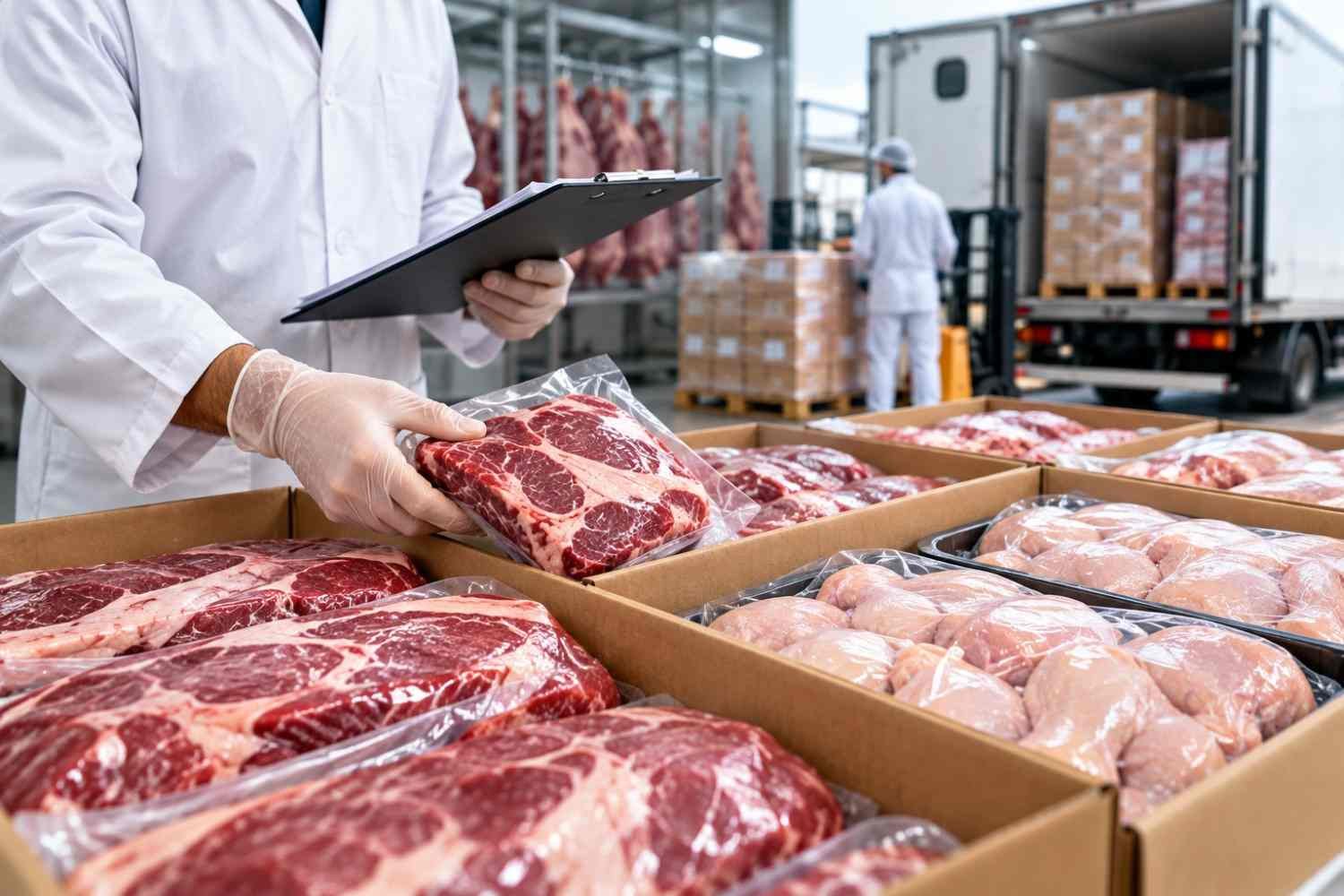
Buying meat in bulk can save money and make weekly cooking easier, whether you are stocking a family freezer for the month or ordering for a restaurant kitchen. But a large order also magnifies every mistake. A wrong cut, a weak cold chain or an unclear price becomes a problem not for one meal, but for dozens.
This checklist covers what to verify before you place a bulk meat order in the UAE, from halal assurance and temperature control to cuts, packaging, pricing and storage space.
Quick Checklist
- Confirm halal status and ask who certifies it
- Ask how the meat is kept cold from storage to your door
- Define exact cuts, weights and packing sizes
- Compare price per kilo, not just the total
- Check packaging and labelling
- Start with a sample or smaller order
- Make sure you have enough fridge and freezer space
- Confirm delivery terms, timing and fees
- Know your receiving and storage routine
The sections below explain each point.
1. Confirm Halal Status and Who Certifies It
For most buyers in the UAE, halal is non-negotiable, and it is reasonable to ask for proof instead of relying on a label on a website. Ask the supplier:
- Is the meat halal certified, and by which body?
- Is the certifying body recognised in the UAE?
- Does this apply to every product in your order, including chicken, beef and mutton?
A reliable supplier answers these questions easily. If answers are vague, treat that as a warning sign. Our guide to halal meat quality standards in the UAE explains what to look for in more detail.
2. Ask About the Cold Chain
In a hot climate, temperature control is the difference between fresh meat and a wasted order. Meat that was warm at any point on its way to you will not recover, even if it looks fine on arrival.
Ask the supplier how the meat is:
- Stored before dispatch
- Packed for transport (insulated boxes, cool packs or refrigerated vans)
- Handled during delivery in summer
As a general guide, chilled meat should arrive cold to the touch and be stored at about 0°C to 4°C, while frozen meat should stay frozen hard at around -18°C or colder. When your delivery arrives, check the packs straight away. They should be cold, sealed and free from leaks. Our article on how to check meat freshness before buying online lists the signs worth checking.
3. Define Exact Cuts and Quantities
Ordering “10 kg of mutton” is not the same as ordering 10 kg of the right mutton. Different cuts behave very differently in the kitchen:
- Bone-in pieces suit curries, biryani and slow cooking
- Boneless cuts suit grills, stir-fries and quick meals
- Mince suits kebabs, koftas and fillings
- Chops and ribs suit grilling and roasting
Before ordering, write down what you will cook over the next several weeks and match the cuts to those meals. Bone-in meat also has a lower yield than boneless meat, so a 5 kg bone-in order will not give you 5 kg of cooked meat. If you are unsure which cuts suit your cooking, our guides on mutton cuts and bone-in vs boneless meat will help you decide.
4. Compare Price Per Kilo, Not Just the Total
A bulk order only makes sense if the price per kilo is clear and fair. When comparing suppliers, check:
- Is the price shown per kg or per pack?
- Does the weight include bone, trimmings or packaging?
- Are there delivery fees, handling fees or minimum order values?
- Is the cut the same quality in every offer you are comparing?
Two offers can look similar but give you very different value once weight, cut and fees are compared fairly. For regular orders, many suppliers will offer a better rate once you reach a certain quantity, so it is worth asking.
5. Check Packaging and Labelling
Good packaging protects meat quality, especially if some of it will sit in the freezer for weeks. Look for:
- Sealed, clean, leak-proof packs
- Clear labels showing the type of meat, cut, weight and date
- Sensible portion sizes, since smaller packs let you defrost only what you need
If you will be freezing most of your order, ask whether the meat can be packed in smaller portions. Opening a single large 5 kg pack to use 500 g is both inconvenient and wasteful, because you cannot safely refreeze thawed meat the way you can handle frozen portions.
6. Start With a Sample or Smaller Order
Even when the website looks good and the price is right, quality and service are only proven once the meat is in your kitchen. Before committing to a large recurring order, place a smaller first order and check:
- Freshness and smell on arrival
- Whether the cuts match what you asked for
- Whether the weight was accurate
- Whether delivery arrived on time
- How the meat cooks: tenderness, flavour and how much waste you trim
This small step prevents expensive disappointment. If a supplier discourages you from trying before you buy in bulk, think twice.
7. Make Sure You Have Enough Storage Space
The most common bulk-buying mistake is simply running out of space. Before you order:
- Measure the free space in your freezer, not just the number of drawers
- Leave room for air to circulate, so that the freezer can keep a steady temperature
- Plan to keep meat in the main compartment rather than the door shelves, which are warmer
- Keep raw meat separated from cooked and ready-to-eat food
A rough guide is that a kilo of packed meat takes up about as much space as a one-litre carton, so ten kilos needs real room. If space is limited, split your purchase into two or three smaller orders instead of one big one. For storage basics, read our guides on how to store fresh meat after home delivery and fresh vs frozen meat.
8. Confirm Delivery Terms
Bulk orders are heavy and time-sensitive, so confirm the details in advance:
- Delivery area and time window
- Who will be at home or at the kitchen to receive the order
- Whether delivery is free above a minimum order value
- What happens if an item is missing or not as ordered
Tell the supplier if you are ordering for a restaurant or a larger household, since receiving times and quantities can then be planned properly.
9. Plan Your Receiving and Storage Routine
It is easy to forget that the work starts once the delivery arrives. Have a simple routine ready:
- Check that the packs are cold and sealed
- Compare the order with your invoice or message
- Move meat to the fridge or freezer immediately
- Write the date on anything that is not already labelled
- Use older packs first
Restaurants and caterers should also keep a simple receiving record with the date, supplier and items received, which helps with quality control and traceability.
Extra Tips for Restaurants and Caterers
Commercial buyers have additional priorities: consistency, supply reliability and usable yield. Ask your supplier about consistent cut sizes, regular delivery schedules and how they handle shortages. Our article on what restaurants look for in a meat supplier goes deeper into these points.
Common Mistakes to Avoid
- Choosing only on price without checking quality
- Ordering more than your freezer can hold
- Not asking about halal certification
- Buying cuts that do not suit how you cook
- Skipping the trial order
- Leaving meat out while you unpack the rest of the delivery
For more pointers, see our guide on mistakes to avoid when buying meat.
Final Thoughts
A good bulk meat order starts before checkout. When you confirm halal status, cold-chain handling, cuts, packaging, price and storage space, you protect both your budget and your food quality. Start with a trial order, learn what works for your kitchen, and then scale up with confidence.
Frequently Asked Questions
Is it cheaper to buy meat in bulk in the UAE?
Often yes, especially if you cook regularly and have the storage space. But savings only exist if the price per kilo is fair, the quality is consistent and nothing goes to waste.
How much meat can I safely store in a home freezer?
It depends on your freezer size. Measure your free space first and leave room for air flow. When in doubt, order less and reorder more often.
How should bulk meat be packed?
In sealed, labelled portions sized for a single meal. This lets you thaw only what you need and reduces waste.
How can I check that bulk meat is halal?
Ask the supplier for the halal certification details and the name of the certifying body, and make sure it covers every product in your order.
Should I order a sample first?
Yes. A small first order lets you judge freshness, accuracy, delivery and cooking quality before committing to a larger one.
What is the best way to defrost bulk meat?
Thaw it slowly in the refrigerator, on the bottom shelf in a container. Avoid thawing on the counter.
Can restaurants order in bulk online?
Yes. Contact the supplier directly to discuss quantities, cuts, delivery schedules and pricing for regular supply.