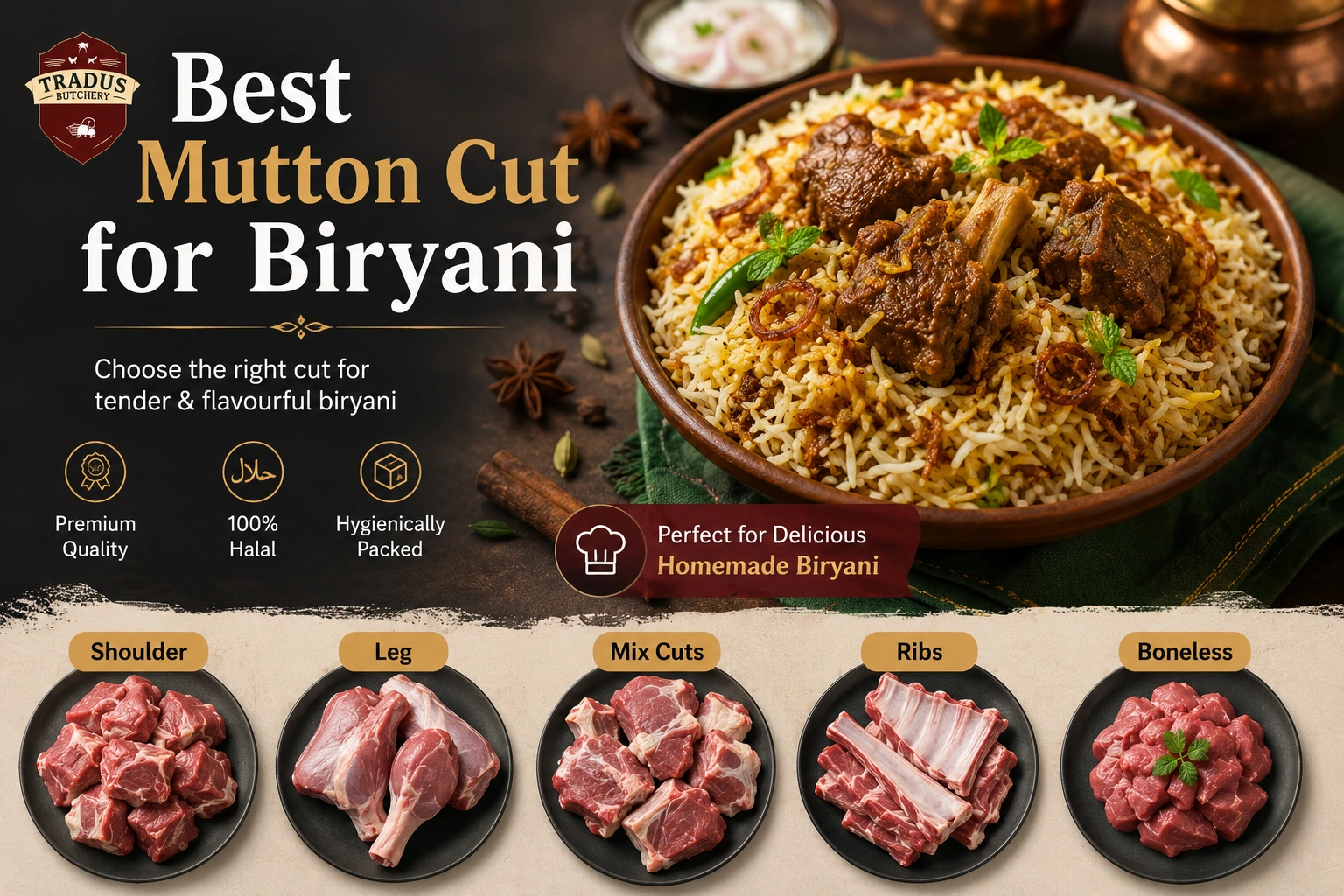
A good mutton biryani depends on more than the rice, spices, and cooking method. The cut of mutton you choose also has a major effect on the flavour, tenderness, moisture, and overall texture of the dish.
For families in Dubai, Sharjah, and Ajman, mutton biryani is a popular choice for family lunches, weekend meals, gatherings, and special occasions. But with several cuts available, choosing the right one can be confusing. So, which is the best mutton cut for biryani?
Mutton shoulder, leg, and mixed bone-in cuts are among the best choices for biryani. Bone-in pieces generally add more flavour and moisture, while shoulder and leg provide a good balance of meat and tenderness when cooked properly.
Which Mutton Cut Is Best for Biryani?
The best mutton cut depends on the type of biryani you are preparing and how you plan to cook it.
| Mutton Cut | Best For | Why |
| Mutton Shoulder | Traditional biryani | Tender, flavourful and suitable for slow cooking |
| Mutton Leg | Family biryani | Leaner meat with substantial pieces |
| Mutton Mix | Everyday biryani | Combination of different cuts and textures |
| Mutton Neck | Slow-cooked biryani | Rich flavour and connective tissue |
| Mutton Ribs | Rich biryani | Adds flavour and moisture |
| Boneless Mutton | Quick preparation | Convenient and easy to serve |
For a traditional, rich biryani, bone-in shoulder or mixed mutton cuts are usually a practical choice.
1. Mutton Shoulder
Mutton shoulder is one of the most versatile cuts for biryani.
It contains a good balance of meat, connective tissue, and fat, which helps the meat become tender during slow cooking. The longer cooking time allows the flavours from the spices, yoghurt, onions, and marinade to penetrate the meat.
Shoulder works particularly well when the mutton is marinated before cooking and then cooked slowly before the rice is added.
Best for: Traditional biryani, family meals and slow-cooked biryani.
2. Mutton Leg
Mutton leg is another popular choice when you want substantial pieces of meat in your biryani.
It is generally leaner than some other cuts, so cooking technique becomes important. Overcooking can make lean meat dry, while proper marination and controlled cooking can produce tender and flavourful pieces.
Mutton leg work well for larger family portions because the pieces provide plenty of edible meat.
Best for: Family biryani, lighter biryani and larger portions.
3. Mutton Mix
If you do not want to select individual cuts, mutton mix can be a convenient option.
A mixed selection can provide different textures and flavours in the same dish. Bone-in pieces can contribute flavour to the cooking liquid, while meatier pieces provide satisfying portions.
This makes mixed mutton useful for everyday home cooking when you want a traditional biryani without spending time choosing individual cuts.
Best for: Everyday biryani and family meals.
4. Mutton Neck
Mutton neck is particularly suitable for slow-cooked dishes.
The cut contains connective tissue that breaks down during longer cooking, creating a rich and flavourful base. For biryani, this can add depth to the masala and cooking stock.
Because the neck requires more cooking time than some tender cuts, it is better suited to recipes where the meat is cooked thoroughly before the final rice layering.
Best for: Slow-cooked biryani and rich masala-based preparations.
5. Mutton Ribs
Mutton ribs can add a rich flavour to biryani because of the combination of bone, meat, and fat.
They are particularly suitable when you want a more robust flavour rather than a very lean biryani. Ribs should be cooked until tender before combining them with the rice.
Best for: Rich biryani, special meals and slow cooking.
6. Boneless Mutton
Boneless mutton is convenient if you prefer biryani that is easier to serve and eat.
It can also be useful for smaller families or people who do not want bones in their meal. However, because there is no bone contributing flavour and moisture, the cooking method and marinade become even more important.
Choose reasonably sized pieces rather than very small cubes, as small pieces can become dry during prolonged cooking.
Best for: Boneless biryani, easy serving and smaller meals.
Bone-In or Boneless Mutton for Biryani?
For traditional biryani, bone-in mutton is generally the better choice for flavour.
The bones and connective tissue contribute to the cooking liquid and can help produce a richer-tasting masala. Bone-in cuts also work well with slow cooking.
Boneless mutton, however, offers greater convenience. It is easier to portion, serve, and eat, making it useful for family meals and catering situations where convenience matters.
If flavour is your main priority, choose bone-in cuts. If convenience is more important, boneless mutton can be a good option.
How to Choose Mutton for Biryani
When buying mutton for biryani, look beyond the name of the cut.
Choose the right piece size
Medium-sized pieces are usually easier to cook evenly than very large or very small pieces.
Consider the cooking method
If you are preparing a slow-cooked biryani, cuts such as shoulder, neck, ribs, and mixed bone-in pieces can work well.
For quicker preparation, choose tender pieces and avoid cuts that require extended cooking.
Look for a balanced amount of meat and fat
Some fat can contribute flavour and moisture, but excessive visible fat may make the biryani unnecessarily greasy.
Consider how many people you are serving
For family meals or gatherings, buying the right quantity is just as important as choosing the right cut. Bone-in mutton contains bones, so you may need more total weight compared with boneless meat.
How Much Mutton Do You Need for Biryani?
The amount depends on the number of people, the amount of rice, and whether the biryani is the main dish.
As a general starting point, around 150 to 250 grams of bone-in mutton per adult can work for a meal where biryani is the main dish. You may need more for larger appetites or gatherings.
For boneless mutton, the required quantity can be lower because there is no bone weight.
For a large gathering, calculate the quantity based on the number of guests rather than buying a fixed amount. This helps reduce both shortages and unnecessary food waste.
How to Make Mutton Tender for Biryani
Even the best cut can become tough if it is not cooked correctly.
A few simple practices can improve the final result:
1. Marinate the mutton before cooking. Yoghurt, ginger, garlic, spices, and other marinade ingredients can help develop flavour.
2. Allow enough cooking time. Tougher cuts need longer cooking to become tender.
3. Avoid very high heat for the entire cooking process. Controlled heat helps the meat cook more evenly.
4. Cook the mutton before layering the rice if necessary. This is particularly useful for cuts that require longer cooking.
5. Do not overcook lean boneless pieces. They can lose moisture if cooked for too long.
6. Allow the biryani to rest after cooking. Resting gives the flavours time to settle and helps the rice retain its texture.
Which Mutton Cut Should You Buy for Biryani?
If you want a traditional and flavourful biryani, mutton shoulder or a good bone-in mixed cut is an excellent choice.
For larger family meals, mutton legs can provide generous meat portions. If you prefer a richer taste, ribs and neck can work well with slow cooking. For convenience, boneless mutton is easier to serve.
The best choice ultimately depends on your recipe, cooking time, preferred texture, and whether you want bone-in or boneless meat.
At Tradus, you can explore different fresh mutton cuts, including mutton leg, mutton shoulder, mutton neck, mutton ribs, mutton mix, and boneless mutton, and choose according to your cooking needs.
Conclusion
Choosing the right mutton cut can make a noticeable difference to your biryani. For a rich traditional result, bone-in shoulder or mixed mutton is a strong choice. Mutton leg works well when you want larger meat portions, while boneless mutton offers convenience.
The key is to match the cut with your cooking method and give the meat enough time to become tender.
Whether you are preparing a weekday family meal or a large biryani for guests, selecting the right mutton cut is the first step towards a better dish.
Frequently Asked Questions
1. What is the best mutton cut for biryani?
Mutton shoulder and bone-in mixed cuts are excellent choices for biryani because they provide good flavour and become tender with proper cooking. A mutton leg is also suitable when you prefer larger, meatier pieces.
2. Is bone-in mutton better for biryani?
Bone-in mutton is often preferred for traditional biryani because the bones and connective tissue contribute flavour to the cooking process. Boneless mutton is a convenient alternative when you prefer easier serving.
3. Is mutton shoulder good for biryani?
Yes. Mutton shoulder is well suited to biryani because it contains a balance of meat and connective tissue and performs well with slow cooking.
4. Is mutton leg good for biryani?
Yes. Mutton leg is a good option for biryani when you want larger, meatier pieces. Because it is relatively lean, proper marination and cooking are important for maintaining tenderness.
5. How much mutton is needed for biryani per person?
As a general starting point, around 150 to 250 grams of bone-in mutton per adult can work when biryani is the main meal. The exact amount depends on appetite, other dishes being served, and the proportion of meat to rice.
6. Which mutton cut is best for slow-cooked biryani?
Mutton shoulder, neck, ribs, and mixed bone-in cuts are good choices for slow-cooked biryani. These cuts can develop rich flavour and tenderness when given enough cooking time.
7. Can I use boneless mutton for biryani?
Yes. Boneless mutton works well for biryani and is easier to serve. Choose appropriately sized pieces and avoid overcooking them to help retain moisture and tenderness.