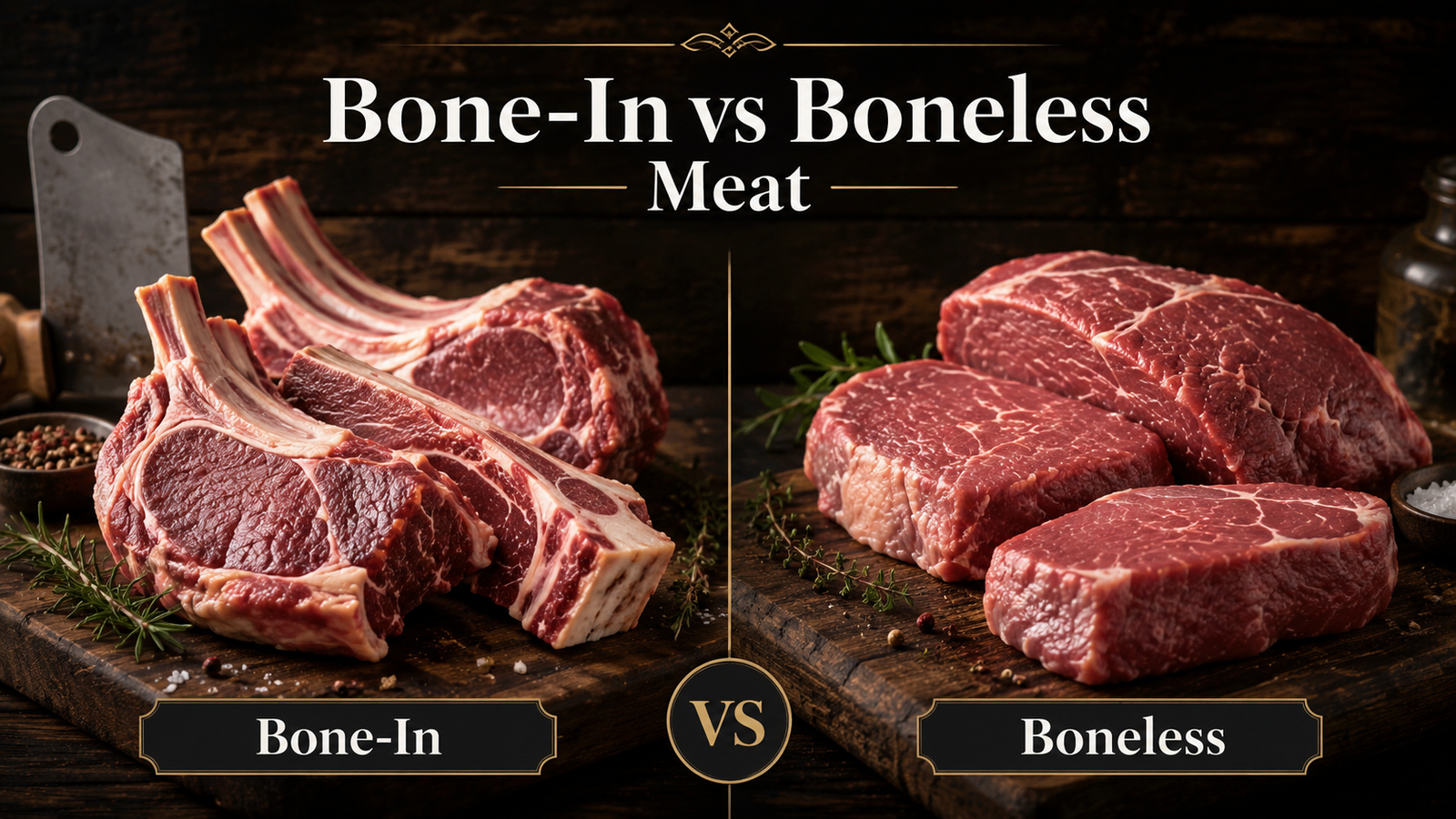
Choosing between bone-in vs boneless meat can completely change the taste, texture, and cooking experience of your meal. Some people prefer bone-in cuts because they deliver richer flavor and juicier texture, while others choose boneless meat for convenience and faster cooking. In many UAE households, both options are used regularly depending on the recipe, cooking style, and personal preference.
Whether you are preparing slow-cooked curry in Sharjah, BBQ in Dubai, or healthy grilled meals in Ajman, understanding the difference between bone-in and boneless meat helps you choose the right cut for every dish. From traditional recipes to modern fitness meals, selecting the correct meat cut can improve flavor, texture, and overall cooking results.
In this guide, we will compare bone-in and boneless meat based on flavor, cooking time, nutrition, convenience, pricing, and the best recipes for each option.
Why Bone-In and Boneless Meat Choices Matter
The type of meat cut you choose directly affects cooking time, tenderness, juiciness, and even the final flavor of your dish. Many people buying meat online focus only on price, but understanding the right cut is equally important for better cooking results.
People preparing traditional curries and slow-cooked recipes often prefer bone-in cuts because the bones release collagen and marrow during cooking. On the other hand, boneless meat is popular among busy families, working professionals, and fitness-focused consumers because it cooks quickly and is easier to portion for daily meals.
Understanding how each type of meat performs during cooking helps you make better decisions for every recipe.
What Is Bone-In Meat?
Bone-in meat refers to cuts where the bone remains attached to the meat. These cuts are commonly used in traditional cooking because the bone helps retain moisture and creates deeper flavor during slow cooking.
Bone-in meat is highly popular in Pakistani, Indian, and Arabic cuisine because it enhances the taste of curries, soups, and grilled dishes. Common examples include premium mutton ,beef with bone, chicken drumsticks, and leg quarters.
People who regularly prepare traditional dishes at home often learn about different types of chicken cuts before choosing meat for curries, BBQ, and slow-cooked recipes.
Many home cooks prefer bone-in meat because it gives curries and broths a naturally rich taste without requiring heavy seasoning.
What Is Boneless Meat?
Boneless meat is meat with the bones removed before packaging and selling. These cuts are easier to cook, simpler to serve, and more convenient for quick meals.
Boneless chicken, boneless beef, and boneless mutton are commonly used for grilling, sandwiches, wraps, stir fry dishes, meal prep, and healthy recipes.
People with busy lifestyles often choose boneless meat because it saves preparation time and is easier to portion for individual meals.
Bone-In vs Boneless Meat: Flavor Comparison
Flavor is one of the biggest reasons why many people prefer bone-in meat.
During slow cooking, the bone releases marrow, collagen, and connective tissue into the dish, creating a richer and more intense taste. This is why dishes like nihari, mutton curry, yakhni, and soups often taste better with bone-in cuts.
Boneless meat still delivers excellent flavor, especially when cooked with marinades and spices, but it usually has a lighter taste compared to bone-in meat.
People who enjoy traditional recipes with stronger flavor often prefer bone-in cuts for everyday cooking.
Bone-In vs Boneless Meat: Cooking Time
Bone-in meat generally takes longer to cook because the bone affects how heat spreads through the meat.
Slow-cooked dishes made with bone-in meat usually become softer, juicier, and more flavorful over time.
Boneless meat cooks faster and more evenly, making it ideal for quick dinners, grilled meals, and weekday cooking.
In busy UAE households where cooking time matters, boneless chicken and beef are commonly preferred for faster meal preparation.
Bone-In vs Boneless Meat: Texture and Juiciness
Bone-in meat usually stays juicier during cooking because the bone helps retain moisture.
This is one of the main reasons why slow-cooked mutton and beef dishes prepared with bone-in cuts often feel softer and richer.
Boneless meat offers a cleaner texture and is easier to chew, making it ideal for children, wraps, sandwiches, and grilled recipes.
Both options can produce delicious meals when cooked properly using the right technique.
Bone-In vs Boneless Meat: Which Is Healthier?
Both options can be healthy depending on your cooking method and portion size.
Bone-in meat may contain additional nutrients because bones release collagen and marrow during cooking. Bone broth made from beef or mutton bones is also rich in minerals and protein.
Boneless meat is usually leaner and may contain less fat, making it suitable for calorie-conscious consumers and fitness-focused meal plans.
A balanced diet with fresh high-quality meat can support muscle growth, energy levels, and overall nutrition.
Bone-In vs Boneless Chicken
Both bone-in and boneless chicken are excellent choices, but each works better for specific recipes.
Bone-In Chicken Is Best For:
- Curry recipes
- Soups and broths
- BBQ drumsticks
- Slow cooking
- Traditional rice dishes
Boneless Chicken Is Best For:
- Grilled chicken
- Meal prep
- Wraps and sandwiches
- Stir fry dishes
- Fitness meals
Choosing the right chicken cut depends on the texture, cooking time, and flavor you want in your final dish.
Bone-In vs Boneless Beef
Bone-in beef is commonly used for nihari, BBQ, beef stock, and slow-cooked desi dishes because it develops deeper flavor during cooking.
Boneless beef is preferred for steaks, burgers, sandwiches, and quick stir fry recipes because it cooks faster and is easier to handle.
People who enjoy rich traditional beef dishes often choose bone-in cuts for their stronger flavor profile.
Bone-In vs Boneless Mutton
Bone-in mutton is highly preferred in traditional recipes because it creates richer gravy and stronger flavor.
Boneless mutton is commonly used for kebabs, biryani, grilled dishes, and quick cooking recipes.
Both options are widely used across the UAE depending on personal preference and recipe style.
Common Mistakes People Make While Buying Meat
Many customers focus only on price and ignore freshness, hygiene, and meat quality while buying meat online.
Choosing the wrong cut for a recipe can also affect flavor and texture significantly. Understanding common meat buying mistakes can help consumers choose fresher and better-quality meat online. Freshness, fat distribution, and proper packaging all play an important role in meat quality.
Buying meat from trusted halal suppliers ensures better hygiene, freshness, and taste.
Why Online Meat Delivery Is Growing in UAE
Online meat delivery has become increasingly popular in the UAE because it saves time and offers better convenience.
Customers can select preferred cuts, packaging style, quantity, and freshness level without visiting crowded supermarkets.
Fresh meat delivery services also provide better convenience for families looking for premium-quality halal meat delivered directly to their doorstep.
Many UAE residents now compare online meat delivery vs supermarkets before ordering meat online.
Why Choose Tradus for Fresh Meat Delivery?
Tradus offers fresh halal meat with trusted quality and hygienic processing standards.
Customers across Dubai, Sharjah, and Ajman choose Tradus because of:
- Premium-quality chicken, beef, and mutton
- Fresh bone-in and boneless cuts
- Hygienic packaging
- Reliable meat delivery
- Multiple cut options for every recipe
- Fresh halal meat sourced for UAE households
Whether you prefer traditional bone-in cuts or convenient boneless meat, Tradus provides options suitable for every cooking style.
Conclusion
The debate between bone-in vs boneless meat does not have one correct answer because both options offer unique advantages.
Bone-in meat delivers richer flavor, juicier texture, and better results for slow-cooked recipes. Boneless meat provides convenience, faster cooking, and easier serving for modern lifestyles.
Your final choice depends on your cooking method, recipe, budget, and personal preference. Whether you enjoy traditional curries, BBQ dishes, healthy grilled chicken, or quick weekday meals, choosing fresh high-quality halal meat always makes the biggest difference.
Tradus makes it easy for customers across Dubai, Sharjah, and Ajman to order premium bone-in and boneless meat online with trusted freshness and quality.
FAQs
1. Is bone-in meat more flavorful than boneless meat?
Yes, bone-in meat is usually more flavorful because bones release collagen and marrow during cooking.
2. Which is healthier: bone-in or boneless meat?
Both can be healthy. Bone-in meat may contain additional nutrients from marrow, while boneless meat is often leaner.
3. Why is boneless meat more expensive?
Boneless meat costs more because the bones are removed and only edible meat remains.
4. Which meat is better for curries?
Bone-in meat is generally preferred for curries because it creates richer flavor and thicker gravy.
5. Does bone-in meat take longer to cook?
Yes, bone-in cuts usually require more cooking time than boneless meat.