Mutton, also known as goat meat, is widely consumed across the Middle East and South Asia for its rich flavour and satisfying texture. In the UAE, mutton is a staple ingredient in biryani, curries, grills, and slow-cooked dishes. But beyond taste, many people want to understand the nutrition facts of mutton—especially its protein, fat, and calorie content.
This detailed guide breaks down mutton nutrition, using real data to explain protein in mutton, fat in mutton, and mutton calories per 100g, helping you make informed dietary choices.
What Is Mutton Nutritionally?
Mutton comes from mature goats and is considered a nutrient-dense red meat. Compared to other meats, it offers a strong balance of protein, essential minerals, and moderate fat when eaten in controlled portions.
Across leading nutrition databases, the mutton nutritional value per 100g shows consistent results.
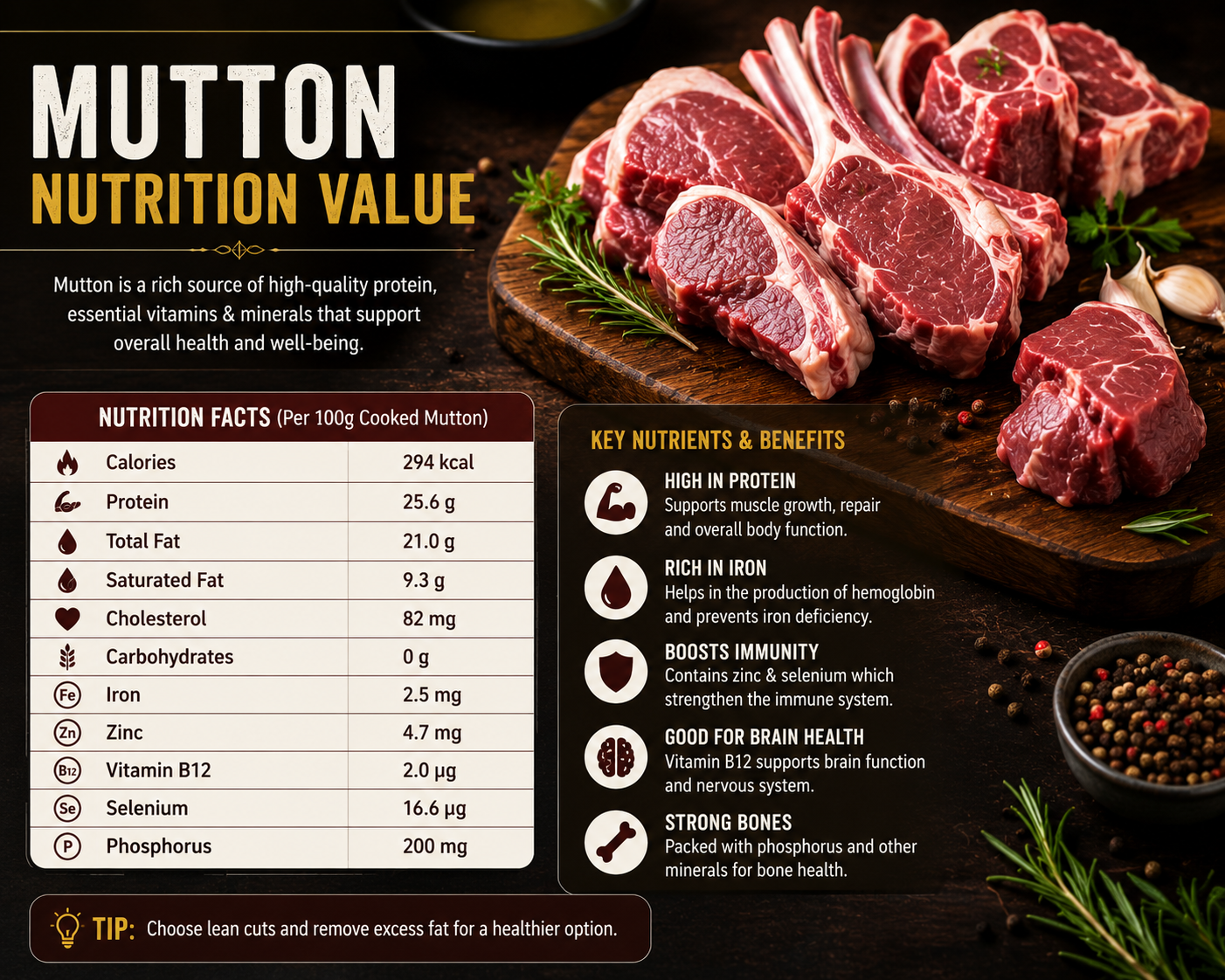
Nutrition Facts of Mutton (Per 100g – Approx.)
Here are the commonly accepted nutrition facts per 100g of cooked mutton:
- Calories: 140–170 kcal
- Protein: 25–27 g
- Fat: 3–6 g
- Iron: ~3 mg
- Zinc: ~4 mg
- Vitamin B12: High
- Cholesterol: Lower than beef and lamb
These values may vary slightly depending on the cut and cooking method.
Protein in Mutton: How Much Do You Really Get?
One of the biggest reasons mutton is valued nutritionally is its protein content.
Protein in ₹Mutton (Key Data)
- Protein in mutton per 100g: ~26 g
- Protein in 100 gm mutton: Covers nearly 50% of daily protein needs
- Protein in 1 kg mutton: ~260 g of high-quality protein
This makes mutton an excellent choice for:
- Muscle repair
- Strength building
- Active lifestyles
- Sustained energy
Cuts such as Mutton Leg, Mutton Chops, and Mutton Mince are especially popular for protein-rich meals.
Fat in Mutton: Is It High or Moderate?
A common misconception is that all red meat is high in fat. In reality, fat in mutton is relatively moderate—especially when compared to lamb or beef.
Fat Breakdown
- Total fat per 100g: ~3–6 g
- Saturated fat: Lower than beef
- Trans fat: Negligible
Choosing lean cuts such as Mutton Boneless or slow-cooked options like Mutton Shoulder helps keep fat intake under control while retaining nutrition.
Mutton Calories Per 100g: What to Expect
If you’re calorie-conscious, here’s the good news:
- Mutton calories per 100g: 140–170 kcal
- Lower calorie density than many red meats
- High satiety due to protein content
This balance allows mutton to fit into weight-conscious diets when portion sizes are managed.
How Different Mutton Cuts Affect Nutrition
Not all cuts are nutritionally identical. Here’s how common cuts vary:
- Mutton Liver: Extremely rich in iron and vitamin B12
- Mutton Ribs: Slightly higher fat, great for slow cooking
- Mutton Neck: Excellent for mineral-rich broths
- Mutton Mix: Balanced combination of lean meat and bone nutrients
- Mutton Carcass: Ideal for families and traditional cooking
Including a fresh mutton cut suited to your recipe helps maximise both nutrition and taste.
Is Mutton Healthy for UAE Diets?
In the UAE, mutton is often prepared using slow cooking and spice blends that improve digestion. When paired with vegetables and whole grains, it provides long-lasting energy without excessive heaviness—especially important in hot climates.
Households sourcing quality meat from trusted suppliers like Tradus benefit from freshness, hygiene, and reliable meat supply across Dubai, Sharjah, and Ajman.
Final Nutritional Verdict on Mutton
From a nutritional standpoint, mutton offers:
- High-quality protein
- Moderate fat
- Essential minerals
- Strong satiety
When eaten in moderation and prepared properly, it remains one of the most nutritionally balanced red meats available.
As a trusted meat supplier serving Dubai, Sharjah, and Ajman, Tradus ensures customers receive hygienically prepared mutton that retains its full nutritional value.
FAQs: Mutton Nutrition & Health
1. What are the nutrition facts of mutton per 100g?
Mutton provides around 140–170 calories, 25–27g protein, and 3–6g fat per 100g, along with iron, zinc, and vitamin B12.
2. How much protein is in mutton?
Protein in mutton per 100g is approximately 26g. One kilogram of mutton contains around 260g of protein.
3. Is mutton high in fat?
No. Fat in mutton is moderate and generally lower than beef or lamb, especially when lean cuts are chosen.
4. Is mutton good for weight management?
Yes. Due to its high protein and moderate calorie content, mutton supports satiety and controlled eating when consumed in proper portions.
5. Which mutton cut is the healthiest?
Lean cuts like boneless mutton, leg, and shoulder offer high protein with lower fat, while liver provides exceptional micronutrients.